Perspectives from Affinity Investments:
What the SpaceX IPO May Tell Us About the Future of Investing
By Greg Lai, CFA
There are moments in investing when the rules don’t change, but the playing field does. Or perhaps it’s the other way around?
Fifty years ago, the challenge was gaining diversified exposure to the public markets. Twenty-five years ago, the challenge was reducing costs, minimizing taxes, and avoiding unnecessary trading. The rise of index investing solved many of those problems and, in doing so, transformed the investment industry.
It has been one of the greatest financial innovations/transformations of our time.
Today, however, the investment landscape may be changing once again.
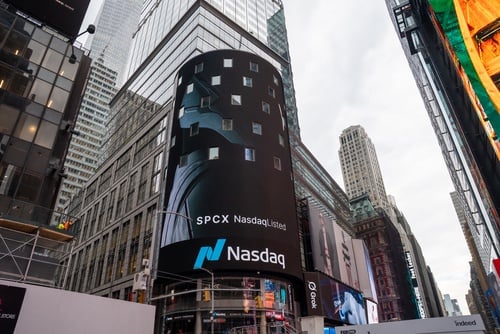
SpaceX’s recent public debut captured the attention of investors around the world. Much of the discussion centered on where the stock traded during its first few days. Was the market overly optimistic? Was the valuation justified? Had investors overreacted?
Perhaps. What caught my attention was something entirely different.
At my monthly Mahjong game—a group of friends who rarely discuss IPO allocations—several people casually mentioned they had received SpaceX shares. It struck me as odd. Here was one of the most anticipated public offerings in years, yet allocations appeared surprisingly widespread.
Whether that observation ultimately proves meaningful is beside the point. It caused me to wonder whether we were witnessing something larger than another successful IPO.
I believe we were.
The real significance of SpaceX isn’t what happened after it became public; it’s what happened before.
For nearly a quarter-century, SpaceX has grown into one of the world’s most innovative and valuable companies while remaining private. During that time, it raised billions of dollars, disrupted multiple industries, pioneered reusable rockets, and created extraordinary economic value. At various points, Elon Musk himself admitted he wasn’t certain the company would survive.
Yet virtually all of that value creation occurred before most public investors had the opportunity to participate.
That raises a simple but profound question: What does it really mean to “own the market” in 2026?
For decades, the answer seemed obvious. Buy a low-cost index fund and participate in the long-term growth of corporate America. For most investors, that has been excellent advice.
Passive investing has democratized investing. It has lowered costs, reduced unnecessary trading, and helped millions of investors accumulate wealth through disciplined, long-term ownership. None of that has changed.
What may have changed is one of the assumptions behind indexing. Indexes are designed to reflect the public markets.
They don’t identify tomorrow’s winners. They recognize today’s. That realization stopped me for a moment.
It’s obvious once you say it out loud, yet we rarely think about it.
Companies enter major indexes only AFTER they have already demonstrated success, achieved significant market value, and satisfied a defined set of eligibility rules.
In other words, indexes don’t discover great companies.
They acknowledge them and, increasingly, amplify them.
Once admitted, capitalization-weighted indexes direct enormous amounts of passive capital toward companies that have already succeeded, reinforcing their positions not only individually but also collectively. In SpaceX’s case, it could be over $2 trillion!
We aren’t surprised; it is exactly what indexes are designed to do. (For another day, it can be argued that index companies benefit from the constant flow of dollars by tracking the index)
But that distinction has become increasingly important.
Many of today’s most innovative businesses are remaining private longer than previous generations. Abundant private capital has removed the urgency to access public markets. By the time many companies finally go public, a significant portion of their value creation has already occurred.
At the same time, the number of publicly traded companies in the United States has declined dramatically from its peak in the 1990s. Down by half!
That creates an interesting paradox.
Passive investing has become the dominant investment strategy, yet the investable public market may represent a shrinking share of where innovation actually occurs.
That isn’t an indictment of indexing.
It is simply a recognition of what indexing is designed to accomplish.
Indexes efficiently capture the collective judgment of the marketplace. They are not intended to predict the future.
That responsibility still belongs to active investors.
Every day, active managers debate valuations, evaluate management teams, examine competitive advantages, and seek to identify which businesses may become tomorrow’s market leaders. Most will be wrong. Some will be spectacularly right. Together, they perform one of the market’s most essential functions: price discovery.
Without active investors, there is no market price.Passive investors don’t determine value.
They accept it.
This isn’t an argument that active investing is superior.
History has demonstrated that consistently outperforming broad market indexes is extraordinarily difficult.
Nor is this an argument against passive investing.
The evidence supporting low-cost indexing remains compelling. Rather, it is an acknowledgment that the investment ecosystem depends on both approaches.
Passive investing provides efficient exposure to established markets. Active investing provides the continuous process of discovery that allows markets to function in the first place.
Perhaps the larger question isn’t whether active or passive investing is better.
Perhaps the more important question is whether the definition of “the market” has quietly changed.
If transformational companies continue to create substantial value while still private, and if public markets continue to shrink as a percentage of the broader opportunity set, then investors should periodically revisit assumptions that have served them well for decades.
Investing has always evolved. Railroads gave way to automobiles. Automobiles gave way to software. Software gave way to artificial intelligence.
Perhaps the next evolution isn’t simply about which companies will win.
Perhaps it is about where they create value—and when and what type of investors are invited to participate.
The SpaceX IPO may ultimately be remembered for more than its valuation or its first week of trading. It may mark the moment investors began asking a different question.
Not whether active investing or passive investing is better. But whether owning the market still means owning the future.